A contribution to the knowledge of soils in natural stands of Serbian spruce
DOI:
https://doi.org/10.63356/gsf.2025.011Keywords:
koluvijum, Pančićeva omorika, požari, zemljištaAbstract
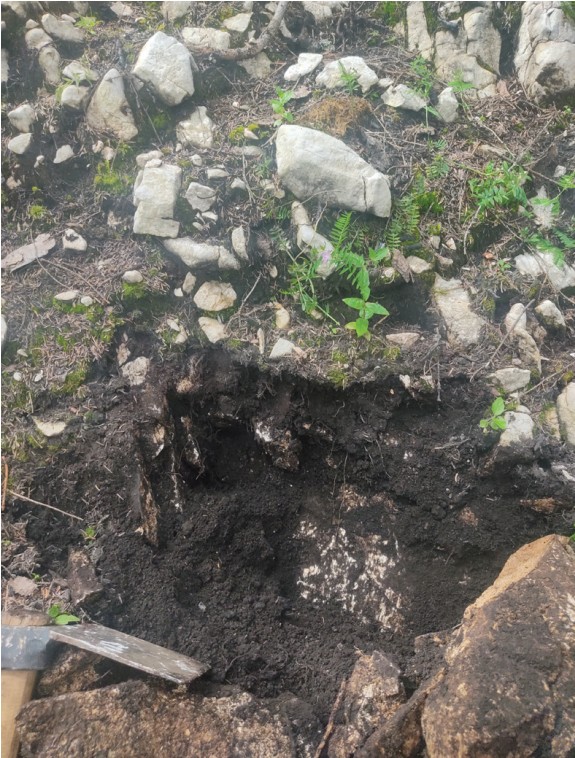
The paper presents the results of pedological research in stands of Serbian spruce (Picea omorika /Pač./Purkyne) affected by fires and parts that were not burned, as well as other treatments applied in the Franklinia project (2021-2023). The aim of the research in this work is to present the physical and chemical properties of the treated parts of the stands and the pedological classification of the profile. The research analyzed 8 pedological profiles, 7 of which were also analyzed in the laboratory. Pedological profiles were opened in the localities of Tesla, Gostilja, Veliki Stolac, Studenac and Trenice. Five analyzed profiles belong to the type of colluvium, and 1 profile each belongs to the types of chert on limestone, chalcocambisol and eutric cambisol. The depth of analyzed colluvium profiles ranges from 30 to 40 cm. As a rule, these are very skeletal soils (10-75%). The textural composition of the analyzed profiles ranges from powdery loams with colluvium and Mollic leptosols, through sandy-clay loams with Leptic Cambisol (Eutric), to clay loams with eutric cambisols. The humus content of all analyzed profiles is high. Soil reactions in water range from neutral to moderately alkaline. The availability of easily accessible forms of phosphorus and potassium is low to medium. The potential of the researched soils for the growth and development of spruce stands is limited, mostly due to skeletal structure.
References
Antić, M., Avdalović, V., & Jović, N. (1968). Evoluciono-genetička serija zemljišta na krečnjaku planine Tare. Glasnik Šumarskog fakulteta, (34), 65–82.
Čigoja, I. (2023). Chemical characteristics of Mollic leptosols on the burned area in “Dubička gora” forest management unit. In Book of abstracts – 16th scientific conference: Students Encountering Science (StES 2023) (pp. 21–23). University of Banja Luka.
Čigoja, I., Kapović Solomun, M., Eremija, S., & Česljar, G. (2024a). Properties of limestone Mollic leptosols in the “Mrkonjićko” forest management area. Glasnik Šumarskog fakulteta Univerziteta u Banjoj Luci, (34), 25–35. https://doi.org/10.7251/GSF2434002C
Čigoja, I., Kapović Solomun, M., Eremija, S., & Češljar, G. (2024b). Characteristics of cambic soils in the “Mrkonjićko” forest management area. Topola, (213), 5–15. https://doi.org/10.5937/topola2413005C
Čolić, D. (1966). Požar kao ekološki faktor u sukcesiji zajednica Pančićeve omorike i redukovanju njenog areala. Zaštita prirode, (33), 1–167.
Đogić, J., Karaklić, V., Cvjetićanin, R., & Eremija, S. (2020). Fitocenološke i edafske karakteristike polidominantne zajednice Piceo omorikae–Abietetum Čolić 1965 na nalazištu Tijesni Do kod Milića u Republici Srpskoj. Šumarstvo, 72(1–2), 83–95.
Đorđević, A., Milovanović, J., & Zlatanović, A. (2021). Consequences of forest fire on soil and endemic species populations of Stara Planina. Bezbednost, 63(3), 43–56. https://doi.org/10.5937/bezbednost2103043D
Food and Agriculture Organization of the United Nations (FAO). (2015). Global forest resources assessment 2015.
Fukarek, P. (1951). Staništa Pančićeve omorike nakon šumskih požara u 1946/47 godini. Šumarski list, 75(1–2), 61–75.
Kadović, R., Belanović, S., Knežević, M., Danilović, M., Košanin, O., & Beloica, J. (2012). Organic carbon stock in some forest soils in Serbia. Glasnik Šumarskog fakulteta, (105), 81–98. https://doi.org/10.2298/GSF111230002K
Kapović Solomun, M., & Eremija, S. (2017). Zemljišta Javor planine. Univerzitet u Banjoj Luci, Šumarski fakultet.
Kneginjić, I. (2018). Geneza, osobine i proizvodni potencijal šumskih zemljišta na Kozari [Unpublished Doctoral dissertation]. Univerzitet u Beogradu, Šumarski fakultet.
Knežević, M., & Košanin, O. (2007). Praktikum iz pedologije. Univerzitet u Beogradu, Šumarski fakultet.
Košanin, O., & Knežević, M. (2007). Šumska zemljišta u GJ “Čezava” NP “Đerdap”. Šumarstvo, 59(1), 25–38.
Margaletić, J., & Margaletić, M. (2003). Požari u šumi i na šumskom zemljištu kao čimbenici degradacije staništa. Šumarski list, 127(9–10), 475–482.
Mataruga, M., & Milanović, Đ. (2020). Prirodne populacije Pančićeve omorike u Republici Srpskoj (Bosna i Hercegovina). Glasnik Šumarskog fakulteta Univerziteta u Banjoj Luci, (30), 77–113. https://doi.org/10.7251/GSF2030005M
Mataruga, M., Milanović, Đ., Ćurić, A., Dragomirović, A., Kovačević, D., Cvjetković, B., & Jovanić, D. (2024). Smjernice za očuvanje Pančićeve omorike in situ. Republički zavod za zaštitu kulturno-istorijskog i prirodnog nasljeđa.
Matović, B., Orlović, S., Stojnić, S., Stojanović, D., Zlatković, M., Đurić, A., Josipović, M., Miletić, B., Mataruga, M., & Milanović, Đ. (2020). Plan upravljanja za zaštitu Pančićeve omorike (Picea omorika) u Srbiji i BiH [Project report].
Milanović, Đ. (2022). Biljne zajednice sa Pančićevom omorikom (Picea omorika /Pančić/ Purkyně) [Unpublished Master’s thesis]. Univerzitet u Banjoj Luci, Šumarski fakultet.
Milanović, Đ., & Mataruga, M. (2025). Prirodna nalazišta Pančićeve omorike u Srbiji. Glasnik Šumarskog fakulteta Univerziteta u Banjoj Luci, 35,
–96. https://doi.org/10.63356/gsf.2025.005
Stojanović, Lj. (1995). Pančićeva omorika na karakterističnim nalazištima u Srbiji – uticaj nekih faktora staništa i sastojina na dinamiku razvitka stabala. Javno preduzeće Nacionalni park Tara.
Škorić, A., Filipovski, G., & Ćirić, M. (1985). Klasifikacija zemljišta Jugoslavije. Akademija nauka i umjetnosti Bosne i Hercegovine.
Vuleta, E. (2001). Šumski požari u Republici Hrvatskoj u razdoblju od 1996. do 2000. godine [Unpublished Bachelor’s thesis]. Sveučilište u Zagrebu, Šumarski fakultet.
Wojick, D. E. (1999). Carbon storage in soil: The ultimate no-regrets policy? Greening Earth Society.
Downloads
Published
Issue
Section
License
Copyright (c) 2025 Jugoslav Brujić, Ilija Čigoja, Tihomir Predić

This work is licensed under a Creative Commons Attribution 4.0 International License.